At A Glance
Where We Worked In February: February mixed everyday Brighton and Hove flats and family homes with wider Sussex house moves, storage runs and single item jobs, plus two headline bookings that are worth studying, London E15 to Wivelsfield RH15 and a Hove to Scotland run that needed proper winter planning.
What Kept Moves Calm And On Time: Access and parking decided timings more than miles, so the smoothest jobs were the ones where customers shared postcodes, floor level, lift or stairs notes, and a quick frontage photo showing the closest legal stopping point. If a Brighton and Hove bay suspension might be needed, allowing around 7 working days notice kept the day from starting on the back foot.
What Changed At ESV This Month: We took our first proper family holiday since starting the business, a few days in Czechia and Prague, then came back straight into a busy run of moves, and the reset showed in how we handled long days and complex jobs. At ESV you still deal directly with Peter from first enquiry to final unload, with £20,000 Goods In Transit and £5m Public Liability, call 07552 555 820 or book via www.eastsussexvan.com and follow us on Instagram for real move days and weekly tips.
February has been one of those months where the variety tells the real story. One day it is a single item sofa pickup across Brighton, the next it is a high floor London flat with lift logistics, then we are back into Sussex house moves and storage runs, then a one van Scotland job that needs proper route planning and sensible crew staging.
We are still a family run Brighton removals company, and customers still deal directly with Peter from first enquiry through to move day. That matters most on the jobs where timings, access, and decision making need to be handled quickly and calmly on site.
If you are looking to book, the best moves usually come from a simple formula: plan early where you can, share the access facts up front, and let us build a realistic sequence rather than trying to wing it on the day.
What We Need To Quote Fast
Postcodes for collection and delivery; a rough inventory or a few photos or a quick video walkthrough; floor level plus lift or stairs details; parking notes and the closest legal stopping point; any high value or fragile items over £500. If you want the fastest accurate quote, those five points are what unlock it. When we have them, we can recommend the right van, the right crew size, and the right start time, and we can do it without back and forth that wastes your time.
February 2026
This month we completed a steady mix of local Brighton and Hove removals, wider Sussex house moves, man and van work, and two long distance bookings that were genuinely worth writing up. A good portion of our work still comes from returning customers or personal recommendations, and that never gets old.
February covered the familiar student and family corridors across Hanover, Seven Dials, Preston Park, Withdean, Patcham, Hollingdean, Rottingdean, Saltdean, Portslade, Hangleton, Kemptown, North Laine, Lewes Road, London Road, and Elm Grove, where permit streets, stair turns, lift bookings, and the closest legal stopping point decide how calm the load feels.
Across Sussex, we were also out in Lewes, Worthing, Lancing, Shoreham By Sea, Crawley, Eastbourne, Haywards Heath, Horsham, Burgess Hill, Hailsham, Uckfield, and Peacehaven for house moves, storage runs, and practical day to day support.
February also reminded us why consistency matters. The moves that felt easiest were not always the smallest. They were the ones where access was clear, the parking plan was realistic, and the loading sequence matched the property, so nothing had to be reshuffled under pressure.
Where We Worked Most This Month
Brighton And Hove: We were in our usual patch across BN1 to BN3, with the normal pattern of permit streets, stair moves, and tight entrances that reward good prep. Expect the familiar mix: flats with lift bookings, terraces with narrow hallway turns, and quick single item jobs where a professional load and strap job saves damage and stress.
Wider Sussex: We also worked across Sussex for house moves, storage runs, and practical move day support. February is often when people start positioning for spring moves, so we saw plenty of "get the big items done now" bookings, including furniture transfers, declutter runs, and getting rooms cleared for decorating.
Further Afield: The headline jobs this month were London E15 to Wivelsfield RH15 and a Hove to Scotland run. Both are good examples of why long distance removals are won or lost in the planning, not in the driving.
Local Pro Tip: Brighton And Hove Moves Start With Parking, Not Boxes
If your street is permit controlled, tight, or prone to double parking, send a quick frontage photo and confirm the closest legal stopping point. It lets us choose the safest carry route and decide whether the calmest option is a short carry, a timed unload window, or arranging a bay suspension in advance when needed.
Job Highlight: London E15 To Wivelsfield RH15, 7th Floor Flat To Bungalow
This was one of the standout jobs of the month because it had everything that can make a move feel stressful on paper, then ran smoothly because the sequence was clear.
The collection was a seventh floor flat in E15. High floor does not automatically mean hard, but it does mean you cannot rely on improvising. Lift availability, concierge rules, loading position, and the simple question of how far you can legally stop from the entrance decide whether the load is a calm steady job or a chaotic rush. Our guide on how to avoid a stressful house move covers the preparation that makes this kind of complex access feel manageable.
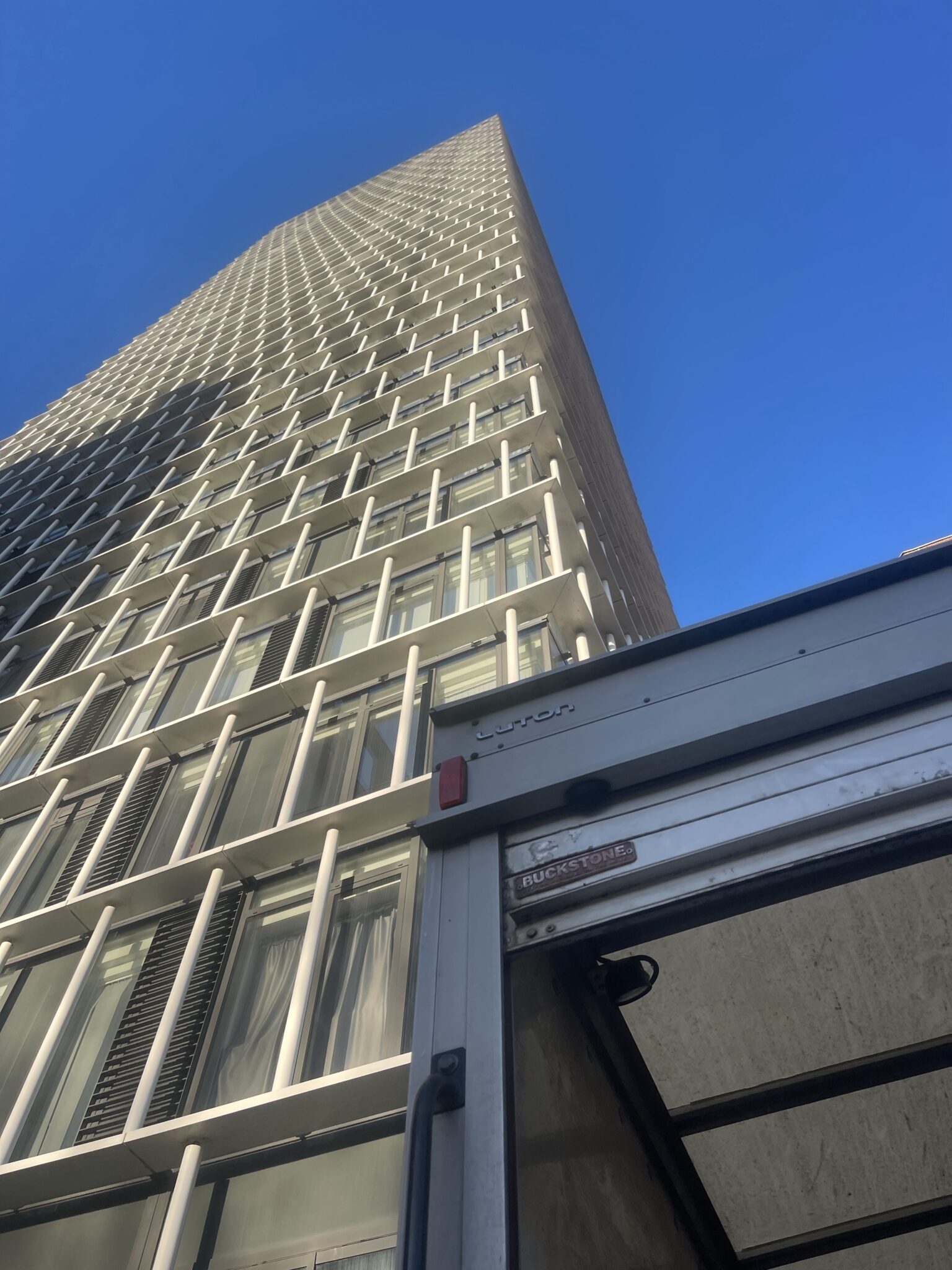 Outside the E15 high rise on a clear February morning. Seventh floor moves run on lift logistics and a legal stopping plan, not improvisation on the day.
We ran it with a three person team, planned an early start, and built the morning around keeping the lift and corridors flowing. The aim on jobs like this is simple: protect the building, protect the client's furniture, and keep the carry routes clear so nothing gets damaged and nobody gets boxed into awkward corners.
We started at 0600, arrived in E15 around 0800, and focused on getting the heavy and bulky items out first so the later loads were lighter and faster. Once the main load was complete, we left E15 around midday, took a short break at Clacket Lane services following GOV.UK drivers' hours guidance, then continued down to Wivelsfield for a bungalow delivery where access was much more straightforward.
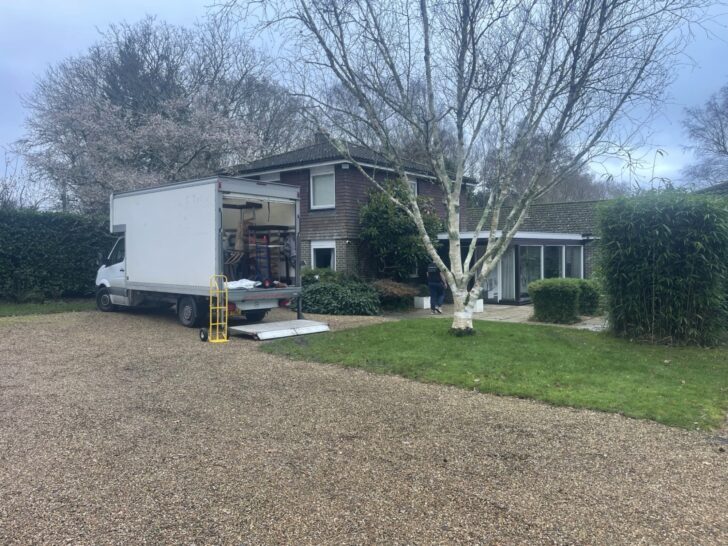
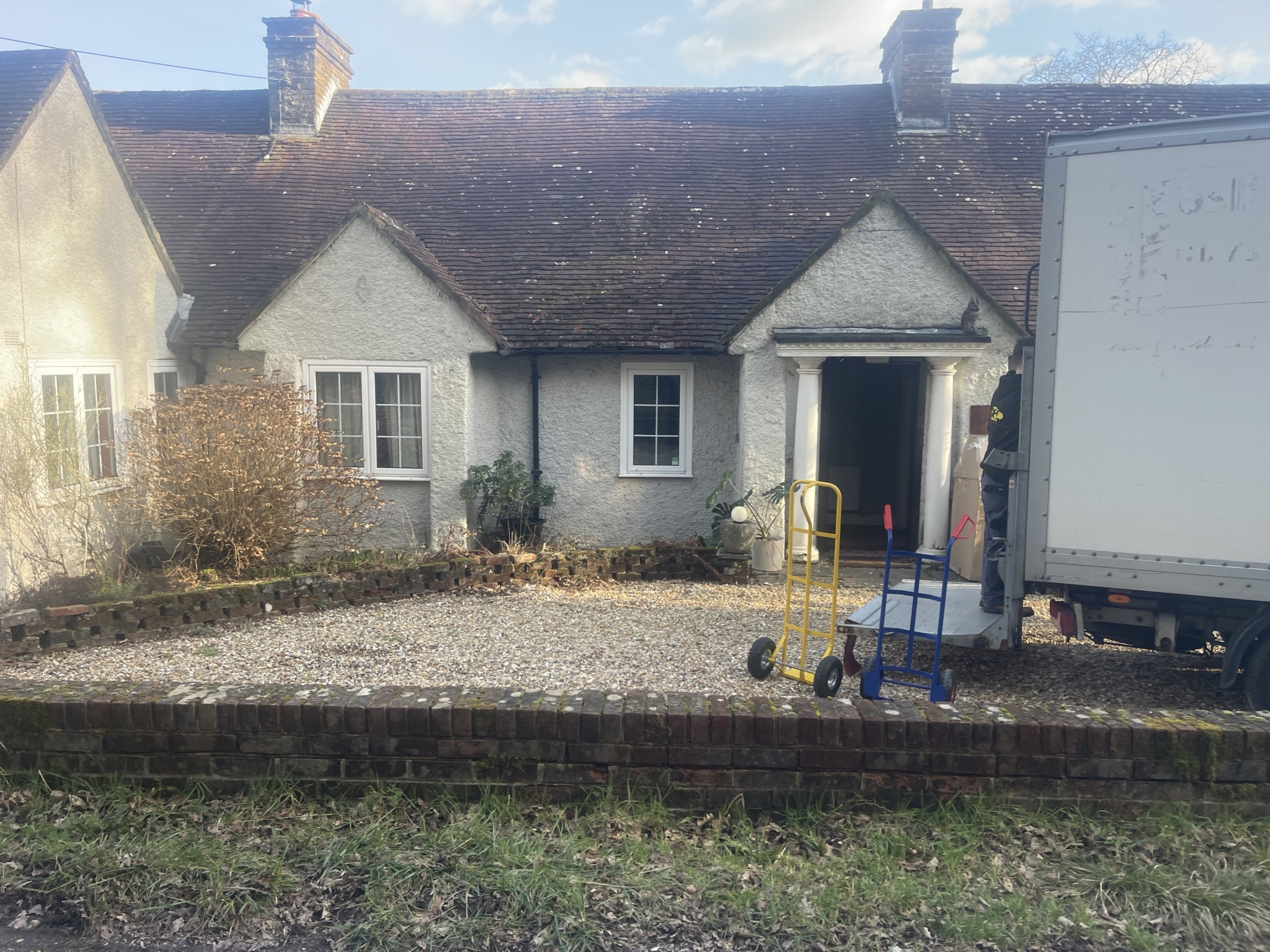 Delivery at the Wivelsfield bungalow: sack trolleys staged, front door open, and driveway access making the unload straightforward after the E15 lift logistics.
Two details made this move feel particularly "complete" rather than just "done". First, we used handyman support at the London end to remove TV mounts properly, so the customer did not have to juggle tools and patching during a busy move day. This is exactly where our handyman and snag support earns its place: we can solve the practical problems around moving, not just shift boxes. Second, we organised follow up snag support at the new property for plastering, kitchen fitting, and a few other settling in jobs. That kind of follow up is often what stops a new place feeling like a building site for weeks.
We also picked up a five star review from the customer, with a second five star review from their partner, which is always the best way to end a job like this. As Mark Wiseman put it:
Great experience with ESV. Very friendly and professional. Minimised the stress of moving.
Source: ESV Google Reviews
Key takeaways from this job: high floor London moves are mostly about sequencing and building rules; a slightly larger crew often makes the day calmer because it reduces bottlenecks; handyman add-ons and snag follow ups turn a move into a proper landing.
Local Pro Tip: London Flats, Book The Lift And Confirm The Stopping Point
If you are moving from a block, confirm lift booking rules, loading bay options, and whether your building has a timed delivery slot system. Then share a quick entrance photo and the closest legal stopping point. London jobs go smooth when the carry route is decided before the van arrives, not after.
Job Highlight: Hove To Scotland, One Van With Staged Crew
We also ran a Hove to Scotland job this month using one van, with a slightly staged crew approach. For case study detail on this type of route, see our Hove to Edinburgh case study and our Brighton to Scotland guide.
At the Hove end we loaded with three of us to keep things moving, protect stairwells properly, and get the van packed in a way that would not shift over a long drive. Long distance loading is not the same as local loading. The aim is not just "fit it in", it is "fit it in so nothing moves, crushes, or rattles for hundreds of miles".
At the Scotland end we had two of us on the unload. That worked well because access was manageable and the van was already packed in a way that made the unload sequence clear. When you load properly, the destination crew size becomes more flexible because you are not fighting the load.
Winter long distance work always comes down to three things. First, start times need to be sensible. A long run is easier when you are not rushing to beat traffic after you have already burned hours in the morning. Second, you need a buffer. Weather, roadworks, and the general reality of UK driving mean you plan for delays so the day stays calm. We follow GOV.UK drivers' hours guidance so rest breaks are built in properly. Third, customers need a simple "what matters" plan. The first night box, essential bedding, chargers, and documents should be loaded so it comes off early, not buried under furniture.
Moves like Hove to Scotland are also a reminder that customers do not just move belongings, they move routines. People want to know that the important things will arrive safely, and that the crew will still be careful at the end of a long day. That is why we keep standards consistent and why we protect rest time around these jobs.
Local Pro Tip: Scotland Moves, Decide Your Arrival Plan Early
If you are travelling separately, decide whether you want to arrive ahead of the van, at the same time, or after. Then plan keys, access, and parking around that decision. Scotland jobs feel dramatically easier when the "meeting point" is clear and there is no last minute scramble for entry or stopping space.
Job Highlight: Saffron Walden, Essex To Bath, Somerset, One Day Long Distance Run
This was a proper one day long distance job for a regular customer who wanted to stick with us and deal with Peter from start to finish. The route was Saffron Walden in Essex down to Bath in Somerset, run with one Luton van and a two man team, and we turned it around in a single day.
The headline challenge was not the load itself, it was the logistics either side. With roughly a three hour commute at each end, the only way to keep the day calm is to start early, load with a clear sequence, and pack the van so it is stable and easy to unload in the right order at the other end. That is exactly what we did, with the heavier items loaded first, protection where needed, and a tidy, strapped load built to travel.
What we liked about this job is the reason the customer booked it. They could have picked any number of bigger national firms, but they wanted consistent communication, a familiar team, and a move where nothing gets handed off to a call centre. As a local removals company, that is still a big part of what we do. One point of contact, one plan, one crew.
Local Pro Tip: Long Days and Late Nights
If you want a one day run to feel smooth, agree the start time early and keep the essentials easy to reach. Pack a first night box that is clearly labelled and do a quick access check at both ends so the van is not hunting for a legal stopping point after a long drive.
Job Highlight: Brighton And Sussex, The Day To Day Mix That Keeps The Diary Full
Alongside the three headline case studies, February was full of the bread and butter work that most people actually book.
We handled the usual Brighton and Sussex mix. Man and van moves for single rooms, studios, and small flats where one experienced mover and the right van is the sensible option. House removals where the plan is about sequencing, protecting floors and staircases, and keeping the day controlled rather than frantic. Single item moves across Sussex, often sofas, beds, wardrobes, dining tables, white goods, and marketplace pickups where the real risk is damage during lifting or transport, not the drive itself. Storage related work, including the familiar pattern of "we need to clear a room now, store it, then move again later" which is incredibly common when people are renovating, separating, or waiting for completions to line up.
These local jobs matter because they are where the ESV approach is most visible. Anyone can turn up with a van. The difference is whether the crew arrives with a plan, communicates clearly, protects the property, and handles furniture like it matters.
A lot of customers also forget that "small moves" are often where damage happens. A single item move can go wrong fast if the item is not wrapped, if straps are not used properly, or if someone tries to force a sofa through a tight turn. February included plenty of these smaller jobs where doing it properly saved the customer from a scratched hallway, a chipped wall, or a broken item.
Local Pro Tip: Single Item Moves, Measure The Tight Point, Not The Room
If you are moving one large item, measure the tightest point on the route, not the room it is currently sitting in. Door width, stair turns, and hallway corners decide the job. A quick photo of the route and a tape measure reading can save you booking the wrong plan and can stop last minute surprises on the day.
Behind The Scenes And Team Updates
February included something we have not done in a long time: we took our first proper family holiday since starting the business, heading to Czechia and spending time in Prague.
When you run a removals company, time off is not just about rest. It is about coming back sharper. Moves are physical, but they are also decision heavy. Every day involves hundreds of small choices: how to load, what to protect first, what to carry where, how to keep a building tidy, how to communicate with customers, neighbours, concierges, and sometimes agents. A short break resets that mental side of the job.
It also reminds us why people move in the first place. You do not move because you love cardboard boxes. You move because life changes, and you want the next chapter to start clean. Seeing a different city, walking Prague streets, and having a few days where we were not thinking about van loading angles was genuinely valuable.
Back in Sussex, it was straight back into the usual rhythm: keeping vans clean and prepped, checking kit, keeping protection materials stocked, and managing the diary so we can stay flexible without overloading the team. We still aim to improve the service each year with practical upgrades that customers actually feel, whether that is better floor protection, better wrapping materials, or smoother admin and booking flow. Read more about how we keep our fleet and planning systems reliable year round.
We also kept pushing the "land properly" idea. Removals is not just transport, it is getting a home liveable. That is why handyman support and snag follow ups keep showing up in our case studies. The best moving days end with beds built, the essentials placed sensibly, and the customer feeling like they can breathe.
Eco And Community Corner
Our eco pledge remains the same and we keep it practical. We prioritise Esso Ethos fuel where possible, we reuse and recycle moving boxes with a take back option for clean reusable boxes, and we run paperless by default for quotes, bookings, and invoices. It is designed to reduce waste without making the move harder, slower, or less protected.
We also see the eco side most clearly on the everyday jobs. When boxes are reused, it reduces the scramble for last minute cardboard. When admin is paperless, it keeps the booking process clear and reduces mistakes. When we choose better fuel where routes allow, it is a small but consistent habit that adds up over a year of miles.
Key Terms
Frontage Photo Legal Stop Point
A quick frontage photo that shows where the van can legally stop prevents last-minute shuffles and wasted carry distance. It turns "parking guesswork" into a clear, compliant loading plan before move morning. For Brighton and Hove, a bay suspension can protect your window on tighter streets.
Seventh Floor Lift Logistics
High-floor moves run on lift availability, corridor flow, and keeping communal areas protected and clear. When the lift plan is booked and shared early, loading stays continuous instead of stop-start. Our London access guide covers high-rise logistics in detail.
Clacket Lane Services Break
A planned stop at Clacket Lane Services protects unload quality by keeping the second half of the day sharp. We follow GOV.UK drivers' hours guidance so rest breaks are built into every long distance schedule.
TV Mount Removal Before Loading
Removing TV mounts before the main load prevents lost screws, buried tools, and rushed wall damage. It is a small task that makes the whole move feel more organised. Our handyman and snag guide covers how these add-ons work in practice.
Snag List Follow Up Scheduling
Snag follow-ups are the difference between "moved in" and "properly landed" after the keys. Plastering touch-ups and kitchen fitting support are easier when they're triaged and booked early. See our practical fixes and snag guide for the full picture.
Staged Crew Scotland Unload
Loading with more hands at the origin and unloading with fewer at the destination works when the van is packed in a strict sequence. A stable, strapped load makes the destination crew size more flexible without chaos. Our Hove to Edinburgh case study covers a similar long distance approach.
One Day Saffron Walden To Bath Turnaround
This route succeeds when the commute time is planned and paid fairly so the team stays fresh at the end. Heavy items and protection priorities are set in the load order so nothing shifts across a long day. For comparable long distance planning, see our Redhill to Southampton case study.
Czechia Prague Reset Break
A short break can improve move-day decisions because removals is as mental as it is physical. Coming back sharper shows up in calmer sequencing and fewer rushed compromises.
First Night Essentials Box Placement
Your first-night box should be loaded for access, not convenience, so it comes off early after a long drive. Bedding, chargers, meds, and documents are the quickest way to make a new place feel liveable. Our guide on how to avoid a stressful house move has a full first night checklist.
Measure The Tight Point Not The Room
Single-item jobs are won by measuring doorways, stair turns, and hallway corners, not the space around the item. A quick route photo and one key measurement prevents surprises on the day.
Frequently Asked Questions
What made February 2026 a standout month for ESV across Brighton, Sussex, and long-distance routes?
February stood out because the diary jumped between small local jobs and three proper "planning wins" that rewarded calm sequencing. The month mixed everyday BN1–BN3 flats and family homes with storage runs and single-item jobs, plus London E15 to Wivelsfield RH15, a Hove to Scotland run, and a one-day Saffron Walden (Essex) to Bath (Somerset) booking that was won on logistics, not miles.
What information do you need to give the fastest accurate quote for a February-style move?
The fastest accurate quote comes from five details that remove guesswork from van choice, crew size, and timing. Send collection and delivery postcodes, a rough inventory (or photos/video), floor level with lift or stairs details, parking notes plus the closest legal stopping point (a frontage photo helps), and a list of any single items valued over £500.
Why did the smoothest February moves depend more on access and parking than mileage?
Access and parking decide the timeline because they control carry distance, bottlenecks, and whether loading stays continuous. When customers shared postcodes, floor level, lift or stairs notes, and a quick frontage photo showing the closest legal stop point, we could set the van correctly from the start and avoid time-wasting reshuffles under pressure.
How should you plan a Brighton and Hove bay suspension and why does the notice period matter?
If you need a bay suspension, treat it as the move's "unlock" because it protects the entire loading window. Allow around 7 working days notice where needed, especially on permit streets or tight roads, so the day doesn't start on the back foot with a long carry or a risky stopping plan. Apply via Brighton and Hove Council.
How did the London E15 to Wivelsfield RH15 move run smoothly from a seventh-floor flat?
The E15 move ran smoothly because the building flow was planned like a system, not improvised on the day. High-floor moves are calm when lift and corridor logistics, a legal stopping point, and a clear loading sequence are agreed early, then the team keeps shared areas protected and the lift moving without bottlenecks.
Why did a three-person crew help the E15 London load feel calmer?
A slightly larger crew makes high-floor jobs calmer because it reduces lift and corridor bottlenecks. With three people you can keep a steady "feed the lift, clear the landing, stack the van" rhythm instead of stop-start carrying that increases risk and stress.
Why was removing TV mounts before loading a genuine time saver on the E15 job?
Removing TV mounts early prevents end-of-move chaos and reduces wall damage risk when tools are buried and people are rushing. Doing it before the main furniture flow ramps up keeps fixings organised and avoids a last-minute scramble while corridors are full and timings are tight. See our handyman and snag guide for more on this kind of add-on support.
What does "snag list follow-up" mean after a move like Wivelsfield RH15?
Snag follow-up means the move doesn't just end with boxes inside, it ends with the home feeling closer to finished. On this job we organised follow-up support for plastering, kitchen fitting, and settling-in tasks so the bungalow landing felt "complete" rather than a building site.
How did the Hove to Scotland job work with a staged crew approach?
The Scotland run worked because the van was packed for stability at the Hove end, then unloaded with a clear sequence at the destination. Loading with three in Hove kept protection and strapping tight for the long drive, and unloading with two at the Scotland end stayed smooth because the load was already built in a controlled order.
What's the simplest "first night" plan for Scotland or long-distance moves in winter?
A one-box essentials plan keeps your landing calm even if travel or weather adds delays. Keep bedding, chargers, documents, and key toiletries in a clearly labelled "first night" box that's loaded to come off early, not buried under furniture.
Why did the Saffron Walden to Bath move need a fair plan around commute time?
One-day long-distance runs only stay safe and careful when the commute is priced and planned honestly. With roughly three hours of driving either side, the job needed an early start, a stable Luton load built for travel, and a schedule that kept the team fresh enough to unload properly at the end.
What changed at ESV in February and how did it show up on move days?
The short Czechia and Prague break mattered because it reset energy and decision-making on long days. When you're running complex access jobs and long-distance schedules, being mentally fresh shows up in cleaner sequencing, calmer communication, and fewer rushed choices.
What cover do you carry and what should customers flag before moving day?
Every move is backed by £20,000 Goods In Transit and £5m Public Liability, with extra clarity when high-value items are listed upfront. If you have any single items over £500 or especially fragile pieces, flag them early so they're recorded clearly and protection and placement can be planned properly.
About the author...
Peter Hawes is the director of ESV Removals Ltd, a family run Brighton and Sussex removals team known for calm planning, careful handling and clear prices. Peter first worked in removals in 2019, started running his own van in 2022 and incorporated ESV Removals Ltd in 2025. He holds a 2:1 BA (Hons) in English Literature and Digital Media from the University of Brighton. Peter oversees every job from first message to the last box and brings local know how for permit zones, tight stairwells and seafront buildings. ESV is fully insured with £40,000 Goods in Transit per vehicle and £5 million Public Liability, backed by hundreds of five star Google reviews and a double winner at the SME Southern Enterprise Awards 2025. The company's eco pledge covers a Euro 6, ULEZ compliant Luton, Esso Ethos+ renewable diesel where available, box reuse and paperless bookings. ESV is signed up to the Brighton & Hove Living Wage Campaign, led by Brighton Chamber, and pays every crew member at least the real Living Wage, because a valued team takes more care on every move. Learn more at www.eastsussexvan.com or follow real move days on Instagram