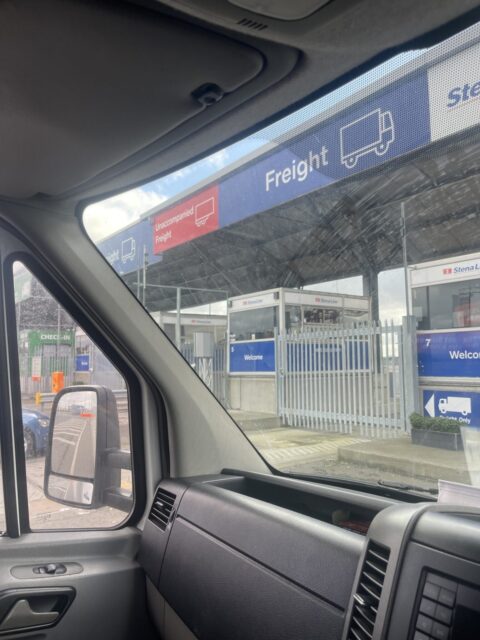
At A Glance
This was an international move done efficiently by bundling in: Conor saved money on his Brighton to Dublin move by sharing the van on a consolidation basis rather than booking a dedicated international removal at full cost, which is a practical option we offer for smaller moves where the customer has a manageable inventory and flexible timing.
The route required ferry planning, not just driving: Getting from Brighton to Dublin means driving to Holyhead on Anglesey and boarding the Stena Line crossing to Dublin Port, which adds a port check-in window, a sailing of about three and a quarter hours, and a second leg of driving through Dublin on arrival, so the logistics need to be sequenced carefully rather than treated like a standard long-distance UK run.
At ESV we handle the customs paperwork so you do not have to: International removals to Ireland involve documentation that trips people up if it is left to the last minute. We help customers navigate the forms, quote a set price before you book, and you deal directly with Peter from the first conversation to the final delivery. Covered by £40,000 Goods in Transit per vehicle and £5 million Public Liability. Call 07552 555 820, request a quote online or see recent move days on Instagram.
The Job
This was a job that does not come up every week, even for a company that regularly covers long-distance moves across the UK. We moved Conor from Brighton to a new flat and dedicated art studio in Dublin, combining a long UK drive to Holyhead, a Stena Line ferry crossing to Dublin Port, an overnight Travelodge stay, and a return trip to Brighton in time for a full weekend of local house removals, furniture moves, and man and van work, the kind priced in our guide to man and van costs in Brighton.
This job was a personal one for me. I'm half Irish and spent a lot of my childhood in County Wicklow, so Holyhead to Dublin is a crossing I have known since I was a boy. Making it with a loaded Luton and a customer's flat and studio on board was new; the route itself was not.
Removals from Brighton to Ireland, like the rest of our European removals, are not common, but they are also not as complicated as people tend to assume. The principles are the same as any long-distance move: plan the route around the real logistics, protect the load properly, deal with the paperwork early, and keep the customer informed throughout. The difference with an international job is that there are more variables to sequence, the port has its own check-in rules, and customs documentation has to be in order before you arrive at the terminal, not on the day.
What set this one apart from other Brighton to Dublin removals was the nature of the inventory. Around half of Conor's load was paintings and working studio equipment: canvases, framed work, materials, and the kind of items that do not have a replacement price you can easily put a number on. The other half was a standard flat move, lots of boxes and a sofa, but that studio half shaped every decision about how we loaded, protected, and positioned the van. For Conor, the practical solution was a consolidation approach. Rather than booking a fully dedicated international removal vehicle at a higher cost, he moved his belongings as part of a shared load on a set price. It cost less, ran just as smoothly, and still gave him full coverage and careful handling throughout.
Local Pro Tip: Brighton to Holyhead, Plan Your Port Check-In Time First and Drive Backwards
Stena Line sailings from Holyhead have fixed check-in windows, typically closing 45 minutes before departure, and if you miss that slot with a loaded removal van you will not be boarding until the next sailing. Work out your required check-in time first, then plan the Brighton departure to hit it with at least an hour of buffer, accounting for the M25 and the full A5 and A55 run through North Wales to Anglesey.
Local Town Focus: Dublin
Dublin draws a particular kind of move from the UK creative scene. It tends to be people with a reason that runs deeper than just a change of scenery: family connections, a career shift, or the decision to build a creative practice somewhere that still has affordable studio space within reach of a city centre. For a working artist, Dublin makes a lot of practical sense. The Liberties, Stoneybatter, and the North Inner City all have a density of studios, galleries, and independent creative spaces that Brighton can match in spirit but rarely in cost. Conor's move to a new flat and dedicated art studio is exactly that pattern: more space, more room to work, and a city that takes its artists seriously.
From a removals perspective, Dublin is a city that rewards preparation and punishes assumptions. The city centre is compact and heavily trafficked, with loading restrictions on many streets that feel similar to inner London in terms of enforcement but are sometimes less predictable in their application. If your destination is in the city centre, the Docklands, or any of the dense residential neighbourhoods on the northside or southside, it is worth confirming parking and loading access in advance rather than assuming a removal van can stop anywhere. Dublin Port arrival also means coming into the city via the East Link or the North Quays, which are busy at most times of day, so build the delivery timing around traffic rather than the ferry arrival time.
What makes Dublin genuinely different from a UK move, beyond the water crossing, is the customs dimension. For anyone relocating their primary residence from the UK to Ireland, the Transfer of Residence relief process exists and is manageable, but it has to be started well before moving day. Irish Revenue requires a completed application, a detailed inventory with values, and evidence of the change of residence. The good news is that for a straightforward relocation of personal effects and household goods, the relief is real and the process is not complicated when it is handled properly. The difficulty only comes when it is left until the week of the move.
Quick Answers
How Much Does A Removal From Brighton To Dublin Cost? A Brighton to Dublin removal is quoted as a set price covering the van, crew, Holyhead ferry and overnight stop, and a consolidation slot costs less than a dedicated van because those costs are shared across a load already making the route.
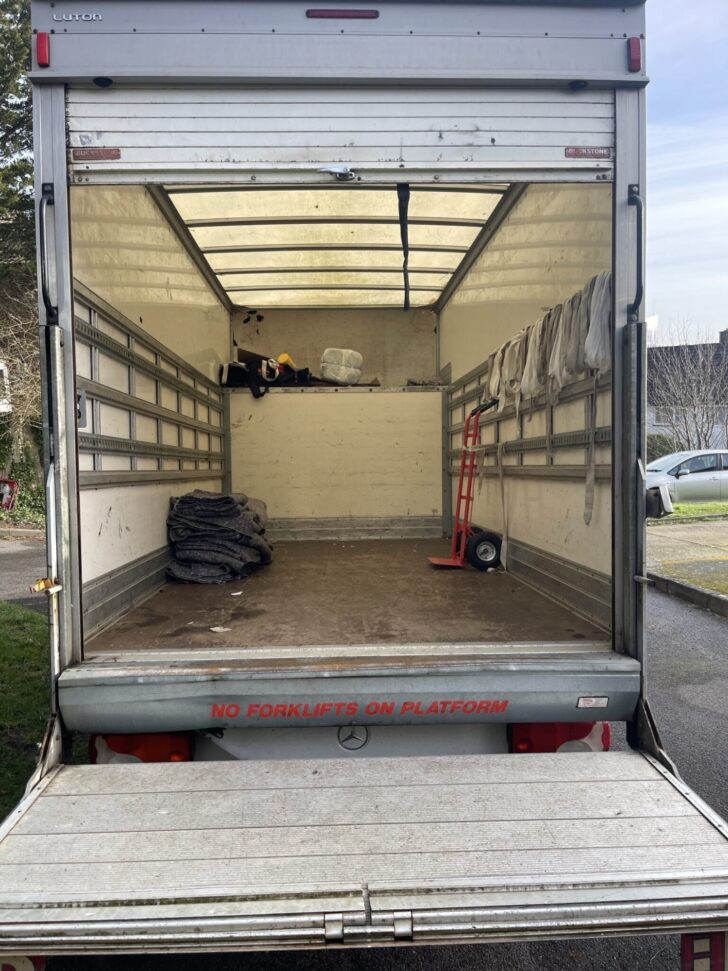
Van Type: A Mercedes Luton was the right choice for an international run of this kind, giving load capacity for a flat and studio contents in one trip with a stable, secure load for the ferry crossing.
Who This Suits: This international consolidation service suits customers moving a one or two bedroom flat worth of belongings to Dublin who want a set price, customs support, and professional handling without the cost of a fully dedicated vehicle.
Insurance: This move was covered by £40,000 Goods in Transit per vehicle and £5 million Public Liability throughout, including the ferry crossing.
Customs Forms: We help customers complete the Transfer of Residence customs relief documentation for moves to Ireland. Start this process at least three to four weeks before your move date, not the week before.
What We Need To Quote: Both locations, your full inventory with approximate box count, any single item worth £500 or more, your target move date, and whether you have flexibility on timing for a consolidation slot.
Set Price: International removals from Brighton to Dublin are quoted as a set price before you book, with a clear overtime clause only for time well beyond the agreed plan. Call 07552 555 820 to discuss your specific job.
Planning The Brighton To Dublin Route
Like all our removals to Ireland, any Brighton to Dublin move has three distinct phases that need individual attention: the UK road leg, the Holyhead to Dublin ferry crossing, and the delivery at the Dublin end. Treating them as one continuous drive is the most common planning mistake, and it is how people end up rushed at the port or exhausted on arrival.
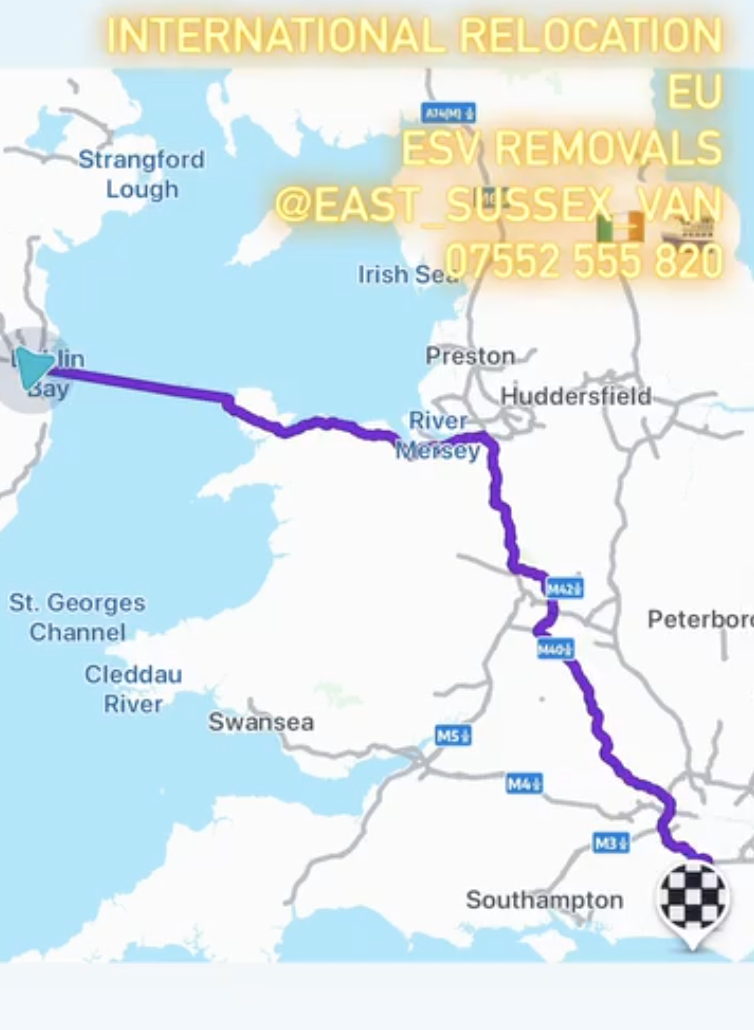
We planned this job around the Stena Line sailing from Holyhead to Dublin Port, which meant working backwards from the port check-in window to establish a realistic Brighton departure time. The drive from Brighton to Holyhead runs via the M25, M1, and then the A5 and A55 through North Wales to Anglesey, and like any of our long distance removals it needs honest time estimates rather than best case sat-nav figures. The A55 in particular can feel fast and then slow down sharply near Bangor and the Britannia Bridge approach to the island.
Travelling 8 times daily between Dublin and Holyhead in only 3 hours 15 minutes.
The overnight stop at a Travelodge was a practical decision, not an extravagance. Breaking a multi-leg international move across two days rather than attempting to drive the full length of England and Wales, sail to Dublin, and deliver in a single push keeps the crew fresh for the unload and means the customer's belongings, including a load that was half paintings and studio equipment, are placed carefully rather than rushed out at the end of an exhausting day.
Local Pro Tip: Overnight Stops on Holyhead Crossings, Stay on Anglesey Not on the Mainland
If your crossing is an early morning sailing from Holyhead, book accommodation on Anglesey itself rather than in Bangor or further east on the mainland. The Britannia Bridge can back up with freight traffic in the morning, and staying on the island means a ten-minute drive to the terminal rather than a timed gamble across the bridge. It is a small detail that removes the biggest stress from the departure morning.
Loading In Brighton: When Half The Van Is Art
Conor's move was unlike a standard flat load because of what made up the inventory. Around half of the van was paintings, canvases, framed work, and working studio equipment. The other half was a conventional flat move: a sofa, a large number of boxes, and the usual personal effects and household goods you would expect from someone leaving a Brighton flat. Those two halves need completely different handling approaches, and the load plan has to reconcile them.
The studio half shaped every decision. Paintings and framed work are among the most anxiety-inducing items to move because the risk is invisible until something goes wrong. A canvas that has flexed in transit, a frame corner that has taken a knock, a glazed piece that has shifted against a hard surface: none of these show up until you unwrap at the other end. The only way to prevent them is to get the protection and positioning right before the van doors close, not to hope for the best on a sea crossing of more than three hours.
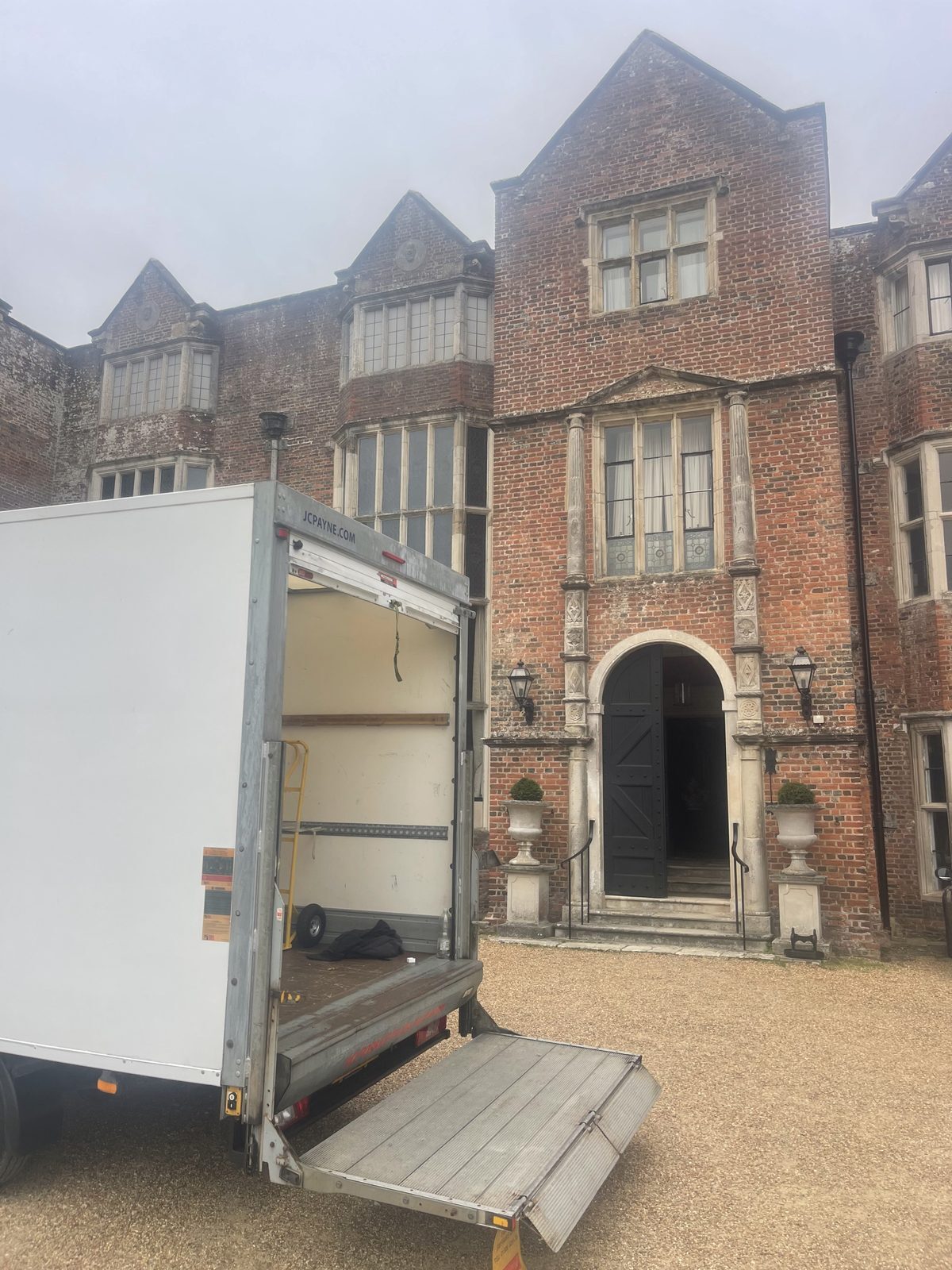
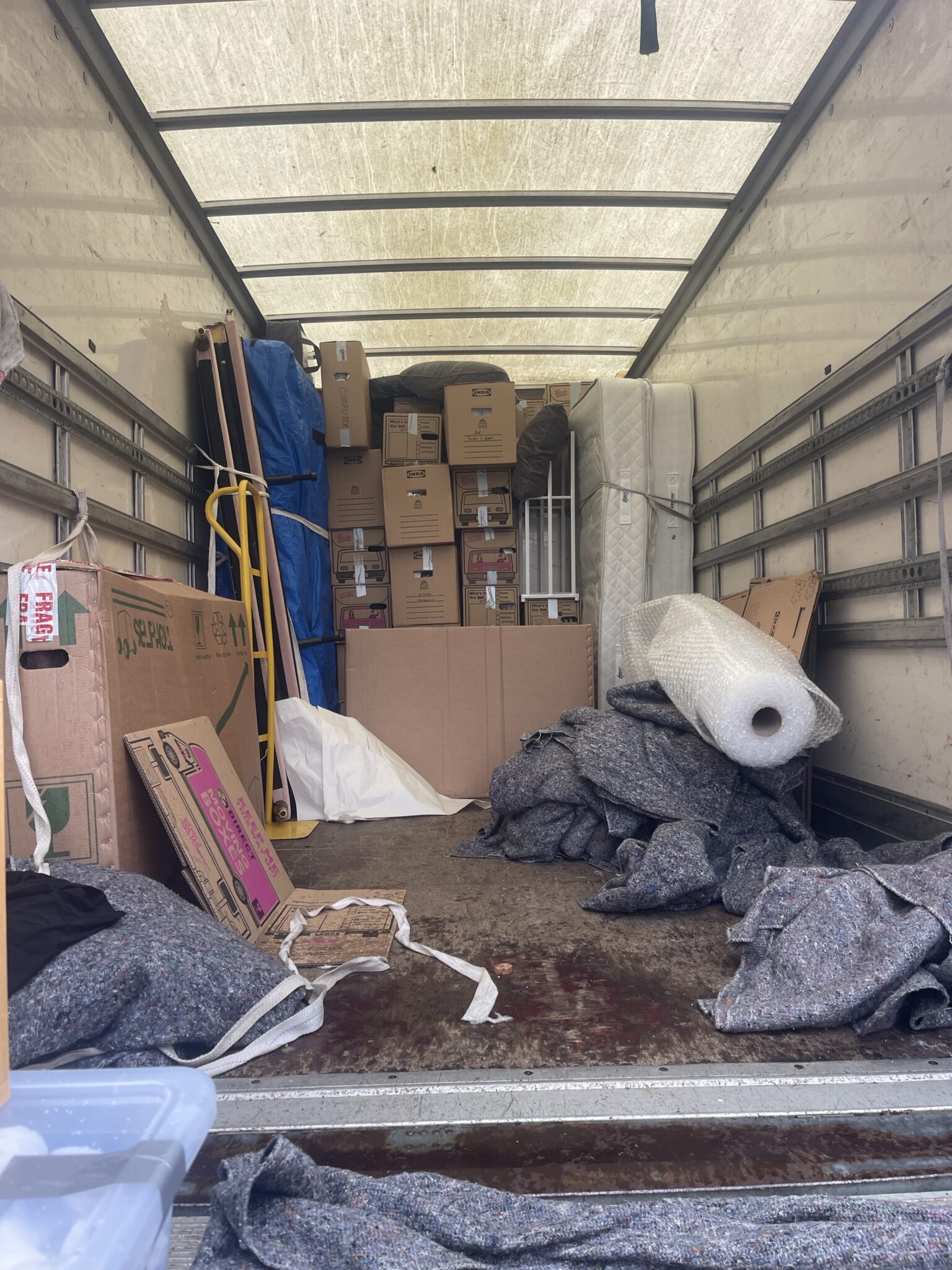
We wrapped each piece individually, loaded framed work face to face with moving blankets between every contact point, and positioned the studio contents in the most stable zone of the Luton where the load would be least affected by movement. The sofa went in first as a structural anchor, the boxes were stacked tight and square around it, and the paintings and studio equipment were loaded last into the protected interior space with ratchet straps holding the whole arrangement firm.
For any international move the load has to hold its shape on the ferry, not just on the road. A van on a vehicle deck is secured against the ship's movement, but that movement is lateral in a way a road surface is not. A well-strapped load with padded contact points between every fragile piece handles that without drama. A loosely stacked van with canvases leaning against boxes does not.
Local Pro Tip: Loading Paintings for a Ferry Crossing, Face to Face with a Blanket Between Every Piece
The mistake people make with framed work is wrapping the outside of each piece and then leaning them against each other. On a ferry crossing with lateral movement, that contact point is where the damage happens. The correct method is face to face pairing with a moving blanket between every single piece, the whole stack positioned vertically and strapped so it cannot lean. If a canvas is unframed and rolled, it travels separately in a rigid tube or flat on a stable surface, never propped against furniture.
The Ferry Crossing: Holyhead To Dublin Port
The Stena Line ferry crossing is where an international removal becomes genuinely different from a long UK run, and it is worth treating it as its own planning phase rather than just a pause in the drive.
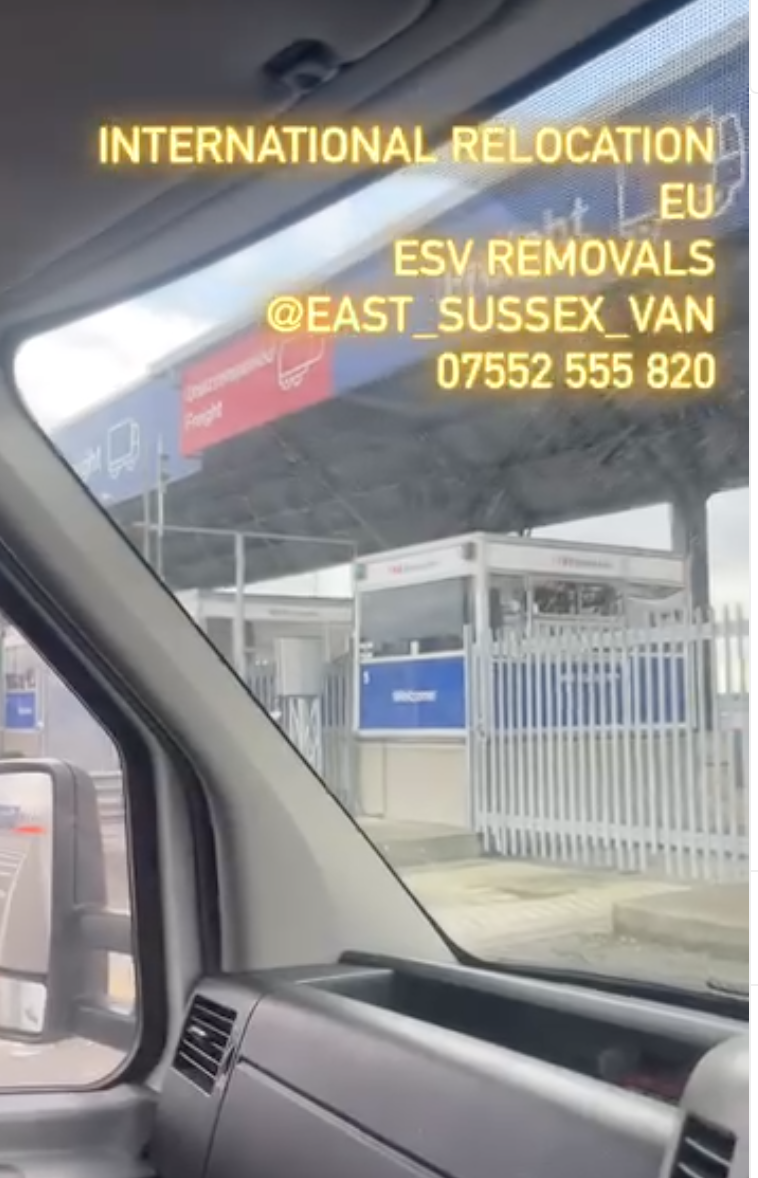
Check-in for vehicle freight and removal vans at Holyhead follows commercial vehicle procedures, which means arriving at the terminal with documentation already prepared and in hand. For a Transfer of Residence move to Ireland, the customs paperwork, primarily the Irish Revenue Transfer of Residence relief application and a fully detailed inventory, needs to be completed and submitted before you arrive at the port. The Holyhead check-in staff are not there to help you fill in forms. They are there to process vehicles that are ready to board. Revenue also requires a valid Pre-Boarding Notification (PBN) ID for personal and household effects moving from Great Britain to Ireland through the freight channel, and it must be in place before you check in with the ferry company.
You will require a valid Pre-Boarding Notification (PBN) ID before you check in.
We stayed with the van during the crossing, as is standard for a loaded removal vehicle. The Holyhead to Dublin sailing takes approximately three hours and fifteen minutes on the Stena Line service, which is a useful window. It is the right time to confirm the delivery address details, check the Dublin unload sequence, and make sure the customer has an accurate arrival estimate. It is not dead time. It is part of the job.
Local Pro Tip: Arriving into Dublin Port, Plan for the East Link and Build in Thirty Minutes
Dublin Port exit routes into the city can back up depending on time of day, and the East Link bridge and the North Quays approach both slow during commuter periods. If your delivery is in the city centre or the northside, build at least thirty minutes of buffer between the ferry docking time and your estimated arrival at the address. Telling a customer you are forty minutes away and arriving in forty minutes is far better than promising twenty and arriving in fifty.
What We Moved
Conor's Brighton to Dublin load split roughly fifty-fifty between household and studio, which is an unusual ratio and one that changes how the whole van is planned.
The household half included:
- Sofa
- Bed frame and mattress
- Wardrobe and chest of drawers
- A large number of boxes, personal effects, clothing bags, and kitchen items
The studio half included:
- Paintings: multiple framed works and canvases of varying sizes
- Studio equipment: easels, lighting, tools, and working materials
- Studio storage and shelving
- Packaged art supplies and materials boxes
Every painting was individually wrapped, paired face to face with moving blankets between contact points, and positioned in the protected interior of the Luton away from the load edges. Studio equipment and materials were boxed or wrapped and loaded in the stable middle zone. The sofa anchored the base of the load, the household boxes were stacked tight around it, and the studio contents occupied the most protected section at the rear interior where lateral movement from the ferry crossing would have the least effect.
Any framed piece or canvas worth £500 or more was flagged, recorded, and handled as a priority item under our £40,000 Goods in Transit cover. For an artist's working inventory, that is not an unusual threshold to hit, and it is worth being honest about values on the inventory rather than leaving it vague.
Why A Consolidation International Removal Made Sense For This Job
Conor's move is a good illustration of when a consolidation approach to international removals from Sussex makes genuine financial sense without any compromise on care or coverage.
A fully dedicated international removal vehicle, booked exclusively for one customer's load, carries a cost that reflects the vehicle, the crew time, the ferry, the overnight accommodation, and the customs handling for that single job. When a customer's inventory fills a portion of a van rather than the whole of it, that cost can be shared across the load in a way that keeps the individual price lower without cutting any corners on documentation, insurance, or handling.
For this Brighton to Dublin job, the consolidation option worked because the timing was flexible, the inventory was manageable in terms of volume, and the move did not require a same-day delivery that demanded a fully dedicated run. Conor got a set price, proper customs support, careful handling of a load that was half original artwork, and a professional result at a lower cost than a solo booking would have carried.
Conor is not alone in making the move. In the year to April 2024, the CSO counted 5,400 UK citizens among the people moving to Ireland, alongside 30,000 returning Irish citizens.
Local Pro Tip: International Consolidation Removals, Flexibility on Date Is What Makes It Work
A consolidation slot is available when your timing works around a van that is already making the route. If you have a hard move date that cannot move, a dedicated vehicle is the right call. If you have two to three weeks of flexibility around your target date, a consolidation booking can cut the cost significantly while still giving you the same documentation support, insurance coverage, and careful handling as a dedicated run.
Back To Brighton: Local Removals The Same Weekend
One detail worth including, because it says something about how ESV operates: after the ferry return from Ireland, we were straight back for a full weekend of house removals in Brighton, furniture moves, and man and van jobs.
That is just how the week works when you run a properly organised Brighton removals business. International moves are not a separate, exotic division of the operation. They are a natural extension of the same planning, the same care, and the same direct communication that go into our removals in Hove and removals in Lewes, from a one-bedroom flat to a student relocation. The van is loaded carefully whether it is crossing the Irish Sea or going three miles along the coast road.
For customers wondering whether ESV can handle an international job and then be available for a local move the same week, the answer is yes, and the reason is straightforward. We plan the logistics properly in advance, keep the schedule realistic, and do not over-commit the diary. That is how you stay available for the work that needs doing.
Thinking About A Brighton To Ireland International Move?
If you are planning a move from Brighton or Sussex to Dublin and you want a set price, customs support, and careful handling throughout, the first step is a conversation about your inventory and your timing.
For an international removal quote, we need both locations, a full list of your main furniture and an approximate box count, your target move date, any single item worth £500 or more, and whether you have flexibility on timing that would allow a consolidation slot. If you have art, studio equipment, instruments, or anything fragile that needs specific protection, tell us upfront so the load plan reflects that from the start.
Transfer of Residence paperwork comes up on most of our removals to the Republic of Ireland, and it is manageable when it is started early. We will walk you through what is needed and make sure everything is in order before the port. Leave it to the last week and it becomes the most stressful part of the job. Start it a month out and it is straightforward.
Call Peter on 07552 555 820, message us on WhatsApp with your Dublin move details, or request a quote online. Follow @esvremovals for behind-the-scenes stories from jobs like this one on Instagram.
Key Terms
Brighton To Dublin International Removals
Brighton to Dublin international removals describes a full UK to Ireland relocation starting from the Brighton and Sussex area, combining a long UK road leg to Holyhead, a Stena Line ferry crossing to Dublin Port, and customs documentation for Transfer of Residence relief. It is a more involved job than a standard long-distance UK move, but it is well within scope when it is planned with enough lead time.
Transfer Of Residence Customs Relief Ireland
Transfer of Residence relief is the customs mechanism that allows people relocating their primary residence to Ireland to import personal effects and household goods free of duty and VAT, subject to conditions, including proof that you own and use the goods and an import window around your move date. The application needs to be submitted to Irish Revenue before arrival at the port, not on the day.
Holyhead To Dublin Port Ferry Crossing
The Stena Line service from Holyhead to Dublin Port, with a sailing time of approximately three hours and fifteen minutes, is the vehicle crossing used for this Brighton to Dublin removal. Check-in windows for loaded removal vans are fixed hard deadlines, not approximate arrival targets, which is why the entire UK driving leg is planned backwards from port check-in time.
Consolidation International Removals
A consolidation international removal means a customer's belongings travel as part of a shared load on a van already making the route, rather than in a fully dedicated vehicle booked for that job alone. It suits customers with flexible timing and a manageable inventory, and it reduces cost without reducing care, documentation support, or insurance coverage.
Art Studio Contents Handling
Moving an artist's studio contents alongside flat furniture requires a separate handling priority for framed work, canvases, and studio materials. These items are wrapped individually, loaded face to face with padding between, and positioned in the most stable zone of the van to account for both road movement and the lateral forces of a ferry crossing.
Set Price International Removal
A set price international removal means the quote agreed before the job covers the van, crew, ferry and overnight stop, with a clear overtime clause only for time well beyond the agreed plan. For a Brighton to Dublin move, this matters because the number of variables involved would make an hourly price hard to predict.
Overnight Stop On Anglesey Before Holyhead
An overnight stop on Anglesey before the Holyhead sailing means a ten-minute drive to the terminal on the morning of the crossing rather than a timed gamble across the Britannia Bridge from the mainland. It removes the biggest timing variable from the departure morning and ensures check-in happens with buffer time rather than at the last minute.
Frequently Asked Questions
Can you do international removals from Brighton to Dublin?
Yes, ESV offers set price international removals from Brighton and Sussex to Dublin, including customs paperwork support and the Stena Line crossing from Holyhead to Dublin Port.
International jobs don't come up every week, but they follow the same principles as any long distance move. We plan the route around the real logistics, protect the load properly, deal with the paperwork early and keep you informed throughout.
The main differences are the port's own check in rules and the customs documents, which have to be in order before you reach the terminal. We offer both dedicated and consolidation options, depending on the size of your inventory and how flexible your timing is.
Which postcodes do you cover for removals from Brighton to Dublin?
We collect from BN1, BN2 and BN3 across Brighton and Hove, plus wider Sussex postcodes including BN, RH, TN and PO, and deliver to Dublin addresses across the D01 to D24 Eircode areas.
Conor's move started from a Brighton flat and finished at a new flat and art studio in Dublin, which is a typical pattern for the city. The Liberties, Stoneybatter, the North Inner City and the Docklands all draw people relocating from Sussex, and we plan each the same way: route first, then port, then the final address.
If your destination is elsewhere in Ireland, send us the Eircode and we will tell you honestly whether the Holyhead to Dublin Port route still makes sense for your move.
How do you plan parking and access at both ends of a Brighton to Dublin move?
We plan access at both ends from a frontage photo and the closest legal stopping point, confirmed before the van leaves Brighton.
In Brighton, if your street is in a permit zone and a Luton needs a guaranteed space, we can arrange a bay suspension through Brighton & Hove City Council, which typically needs about 7 working days' notice.
Dublin needs the same care. The city centre is compact and heavily trafficked, and loading restrictions on many streets feel similar to inner London but can be less predictable. Assuming a removal van can stop anywhere is the mistake to avoid.
Send us a photo of the front of each building, where a van could legally stop, and how far that is from your door. We build the unload plan around that reality.
Should I book a Sprinter or a Luton for a Brighton to Dublin removal?
For a one or two bedroom flat with studio contents, like Conor's, a Mercedes Luton is the right van because it carries the whole load in one trip and keeps it stable on the ferry.
A Mercedes Sprinter can work for a smaller inventory if it fits comfortably and the Dublin address suits a shorter van. We recommend the vehicle once we have a clear picture of your inventory, including how much of it is fragile or oversized studio work.
How long does a Brighton to Dublin removal take with the Holyhead ferry?
A Brighton to Dublin removal is a minimum two day job, with the UK road leg and an overnight stop on day one, then the Stena Line crossing and the Dublin delivery.
We plan backwards from the Holyhead check in, which typically closes 45 minutes before departure. Miss it with a loaded van and you wait for the next sailing, which pushes back the delivery in Dublin. We leave Brighton with at least an hour of buffer for the M25, M1, A5 and A55 run to Anglesey.
For an early sailing, staying on Anglesey rather than the mainland means a ten minute drive to the terminal instead of a gamble on the Britannia Bridge.
The crossing to Dublin Port takes about three hours and fifteen minutes. On arrival we allow at least thirty minutes for the East Link and North Quays before giving you a delivery time.
What is the difference between a dedicated and a consolidation international removal, and which costs less?
A dedicated international removal books the van exclusively for your load on a date fixed around you, while a consolidation removal carries your belongings as part of a shared load on a van already making the route.
The cost of a dedicated run reflects the vehicle, crew time, ferry, overnight accommodation and customs handling for one customer alone. With consolidation, that cost is shared, so your individual price comes down.
The care, documentation support and insurance are identical either way. Consolidation suits customers with a manageable inventory and two to three weeks of flexibility around their target date. If your move date cannot change, a dedicated vehicle is the right call.
Consolidation is the most effective way to cut the cost. Conor took that route and paid less than a solo booking would have cost, with the same customs support and careful handling of a studio's worth of paintings. A clear, honest inventory helps too, because it lets us confirm early whether your belongings fit a shared load or need a van of their own, and either way the quote is a set price agreed before you book.
Are my belongings insured on the Holyhead to Dublin ferry crossing?
Yes, our £40,000 Goods in Transit per vehicle and £5 million Public Liability cover applies throughout a Brighton to Dublin move, including the time the van is on the ferry.
That cover is backed by Admiral Platinum and covers the road legs through England and Wales as well as the sailing itself.
We stay with the van for the whole crossing, as is standard for a loaded removal vehicle. A ferry deck moves sideways in a way a road does not, so the load is strapped and padded specifically for that. Good insurance matters, but a load that holds its shape is what keeps your belongings from needing a claim in the first place.
How do you protect paintings and studio equipment on an international removal to Dublin?
We wrap every painting individually, pair framed work face to face with a moving blanket between every piece, and strap the stack upright in the most stable zone of the Luton.
Around half of Conor's load was canvases, framed work and studio equipment, and that half shaped every loading decision. Damage to artwork is often invisible until you unwrap, so the protection has to be right before the doors close.
Unframed canvases that are rolled travel in a rigid tube or flat on a stable surface, never propped against furniture.
If any single item is worth £500 or more, tell us upfront so we can record it on the inventory and plan its protection before loading. Honest values also help with your customs inventory for Ireland.
Do I need a Transfer of Residence form to move to Ireland?
Yes, if you are moving your main home to Ireland, you need a Transfer of Residence relief application to Irish Revenue, along with a detailed inventory with values, proof of your change of residence, and a Pre-Boarding Notification ID before you check in at Holyhead.
Transfer of Residence relief lets you bring personal and household belongings into Ireland free of customs duty and VAT, provided you can show you own and use them and they arrive within the window around your move, from 6 months before to 12 months after, as Citizens Information explains.
The Holyhead check in staff are there to process vehicles that are ready to board, not to help with forms. We walk you through what is needed and review your paperwork before the port.
Start the Transfer of Residence relief process at least four weeks before your move date, and ideally six if your inventory includes many high value items. The application itself is not difficult. What takes time is building an inventory accurate enough to submit, because Irish Revenue needs values against everything you are bringing, and for an artist moving a working studio, every canvas and piece of equipment has to be listed.
What do you need from me to quote a Brighton to Dublin removal fast?
To quote fast, we need your Brighton or Sussex postcode, your Dublin Eircode, an inventory with an approximate box count and photos, floor levels and parking at both ends and your target date.
Tell us too whether you have any flexibility on dates, as that decides whether a consolidation slot is an option.
If your load includes paintings, instruments, studio equipment or anything fragile, say so from the start and give us a sense of the quantities. A load with a large share of artwork needs a different plan from a standard flat move, and the quote should reflect that from day one.
Why choose ESV for an international removal from Brighton to Dublin?
With ESV, you deal directly with Peter from the first conversation to the final delivery, and every international move gets the same calm planning and careful handling as a local Brighton job.
After delivering Conor's flat and studio in Dublin, we were back in Brighton for a full weekend of local removals and man and van work. That only happens when the logistics are planned properly and the diary is never overcommitted.
That approach is why we are backed by hundreds of five star Google reviews.
To talk through your move, call Peter on 07552 555 820 or request a set price quote online. Follow us on Instagram at @esvremovals for behind the scenes stories from jobs like this one.
About The Author...
Peter Hawes is the director of ESV Removals Ltd, a family run Brighton and Sussex removals team known for calm planning, careful handling and clear prices. Peter first worked in removals in 2019, started running his own van in 2022 and incorporated ESV Removals Ltd in 2025. He holds a 2:1 BA (Hons) in English Literature and Digital Media from the University of Brighton. Peter oversees every job from first message to the last box and brings local know how for permit zones, tight stairwells and seafront buildings. ESV is fully insured with £40,000 Goods in Transit per vehicle and £5 million Public Liability, backed by hundreds of five star Google reviews, and was a double winner at the SME Southern Enterprise Awards 2025. The company's eco pledge covers a Euro 6, ULEZ compliant Luton, Esso Ethos+ renewable diesel where available, box reuse and paperless bookings. ESV is signed up to the Brighton & Hove Living Wage Campaign, led by Brighton Chamber, and pays every crew member at least the real Living Wage, because a valued team takes more care on every move. Learn more at www.eastsussexvan.com or follow real move days on Instagram.